How to Install Stackwallet
A complete 2026 walkthrough for installing Stack Wallet on any platform — with safety steps, backup tips, a video and a FAQ.
A complete 2026 walkthrough for installing Stack Wallet on any platform — with safety steps, backup tips, a video and a FAQ.
Installing Stack Wallet is quick, and the most important part is doing it safely: getting the genuine app and backing up your recovery phrase. This guide walks through both.
Get Stack Wallet from the official website or official GitHub releases for your platform. Only use official sources — never an ad, mirror, or link from a message.
Run the installer (desktop) or install from your app store (mobile), approve any system prompt, and open Stack Wallet.
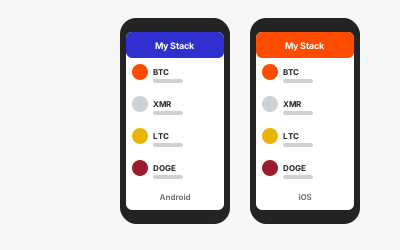
Choose to create a new wallet and select the coin you want to use. Stack Wallet supports nine cryptocurrencies you can add over time.
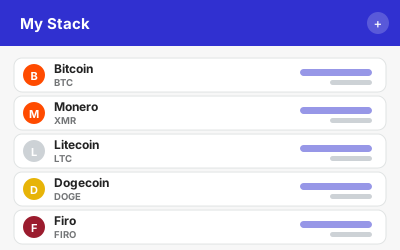
The app shows a recovery seed phrase. Write it down on paper, store it offline in a safe place, and never photograph it or type it into a website.
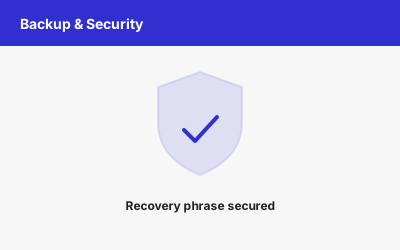
Share your receive address to get funds, and manage everything from the app. Your keys stay on your device the whole time.
Prefer to watch? This short video tutorial shows the full Stack Wallet installation and first wallet setup.
Replace the placeholder video ID with your own tutorial in install-guide/index.php.
Download the desktop build for your operating system from the official GitHub releases, run it, and follow the prompts. On first launch, create a wallet and back up your seed phrase.
Install from the official app store for your device. Advanced Android users can use the official APK or F-Droid build. Allow the app to open, then create and back up your wallet.
Fake crypto wallet sites are a common scam. Always confirm you are on the official website or official GitHub before downloading.
Your recovery seed is the only way to restore funds. Keep it on paper, offline, in a safe place — never in a screenshot, email or cloud note.
No legitimate site, app or support person will ever ask for your seed phrase. Anyone who does is trying to steal your funds.
Stack Wallet keeps your keys in secure local storage — in effect a vault on your own device — rather than on a server, which is what makes it non-custodial.
Most installation problems have simple fixes. Here are the issues people hit most often when installing Stackwallet on desktop or mobile, and how to solve them safely.
Because the build is a downloaded ZIP, Windows SmartScreen may warn on first run. If you have verified you downloaded from the official GitHub release, choose More info → Run anyway. If you are not sure of the source, stop and re-download from the official source.
Make sure you extracted the entire ZIP to a folder first, rather than running the app from inside the ZIP preview. Keep all extracted files together and launch the main Stack Wallet executable.
For a build downloaded outside the App Store, right-click the app and choose Open the first time, then confirm. This is standard macOS behaviour for apps from outside the store and does not change the app.
Make the file executable first with chmod +x on the AppImage, then run it. If it still will not start, try the flatpak build instead, which some Ubuntu setups prefer.
Wallets need an internet connection to sync with the network. Check your connection, give it time on first sync, and if needed switch to a different or custom node in settings.
Double-check you entered every seed word correctly and in order, and that you selected the right coin and wallet type. The seed phrase must match exactly — there is no way to recover funds without the correct phrase.
A few related questions come up often, and they deserve honest answers. On vault storage: Stack Wallet stores your keys and recovery data locally on your device, in effect a vault, rather than on any server. That local vault is what keeps the wallet non-custodial, and it is also why backing up your seed phrase matters — the vault lives on a device that could be lost.
On markdown: unlike a notes or messaging app, a crypto wallet does not use markdown formatting inside the app, so labels and address-book notes are plain text only. If you keep your own setup notes outside the wallet, a plain markdown file is a fine place to record non-sensitive reminders — but never put your seed phrase in any digital note, markdown or otherwise.
On Stackwallet plugins: Stack Wallet does not have a browser-style plugin system, so be wary of anything advertising itself as a "Stackwallet plugin" or "mod" — especially if it asks for your seed phrase. The legitimate ways the wallet is extensible are its fully open-source codebase, which anyone can audit or build on, and custom node support for advanced users. Stick to those and to official sources.
Download the official Windows build from the project GitHub releases, run the file, approve the security prompt, and open the app. Then create a wallet and back up your recovery phrase offline.
Install Stack Wallet from the official app store for your device. Advanced Android users can use the official APK or F-Droid build. Open the app, create a wallet and securely back up your seed phrase.
Yes, as long as you download only from official sources: the official website or official GitHub releases. Avoid third-party mirrors and ads, and never enter your seed phrase on any website.
Backing up your recovery seed phrase. Because Stack Wallet is non-custodial, your seed phrase is the only way to restore your funds. Write it down, store it offline, and never share it with anyone.
Your private keys and recovery seed are stored locally on your own device, in effect a secure vault on the device. They are never uploaded or shared, which is what makes the wallet non-custodial.
Yes. Install Stack Wallet from an official source on the new device and use the restore option with your recovery seed phrase. This recreates your wallet, which is why a safe offline backup of the seed is essential.
Because the Windows build is a downloaded ZIP, SmartScreen may warn on first run. If you have confirmed you downloaded it from the official GitHub release, you can choose More info then Run anyway. If you are unsure of the source, do not run it and re-download from the official source.
No. Stack Wallet does not have a browser-style plugin system. Treat anything calling itself a Stackwallet plugin or mod with caution, especially if it asks for your seed phrase. The wallet is extensible through its open-source code and custom node support, not through plugins.
Download from official sources and follow the steps above to set up self-custody safely.